Report Summary
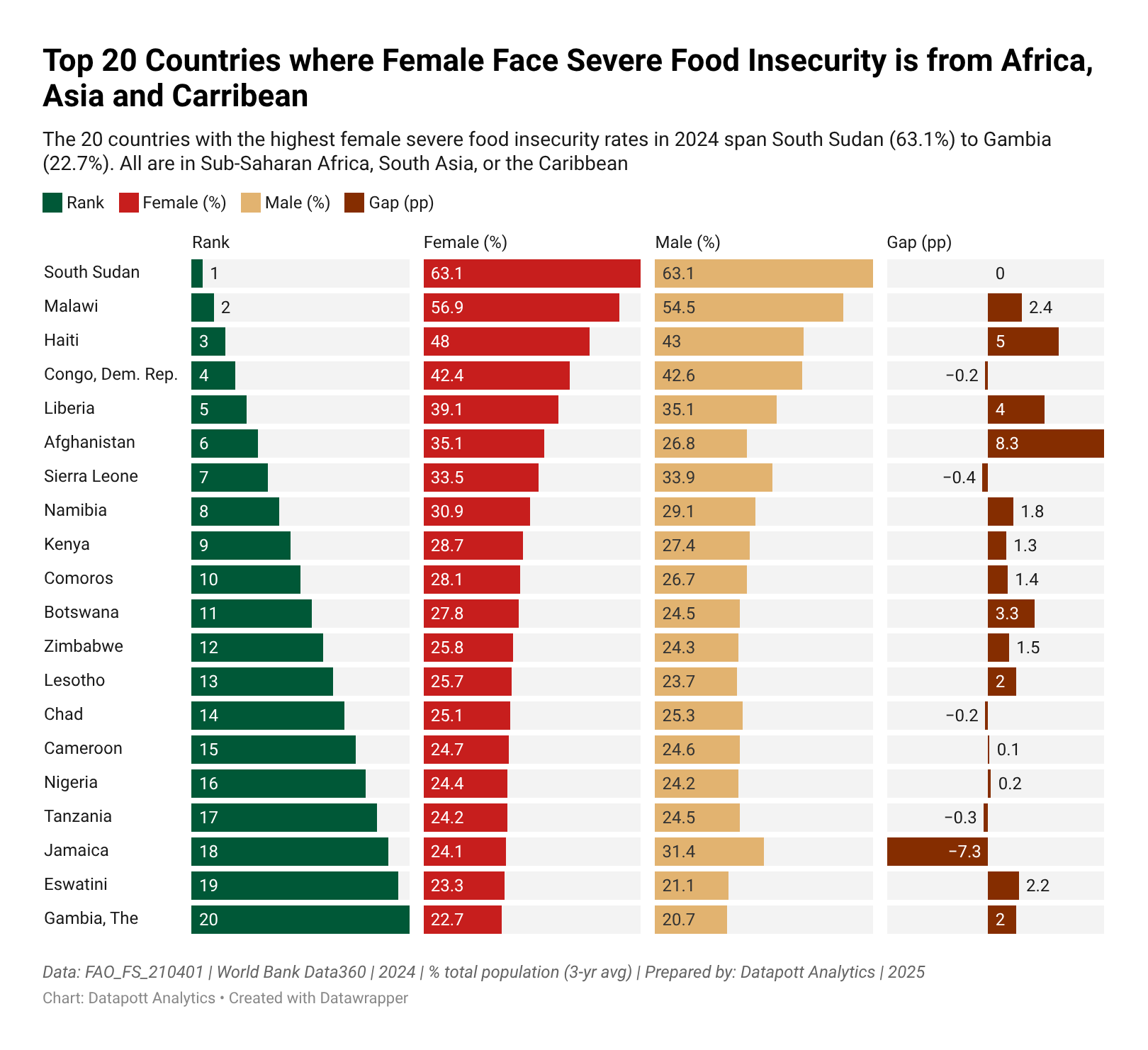
- 16 of 20 countries are in Sub-Saharan Africa, where overlapping crises of conflict, climate shocks, and entrenched gender inequality push women’s food insecurity to catastrophic levels.
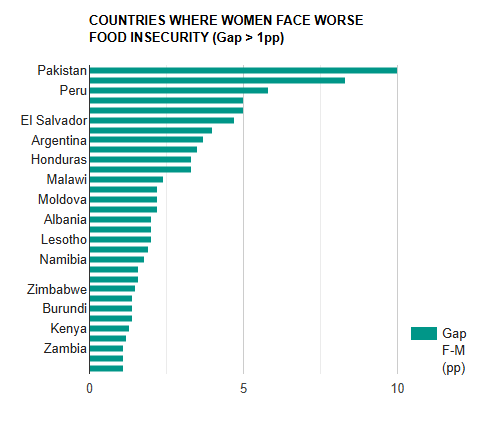
- Afghanistan’s 8.3pp gap — women at 35.1%, men at 26.8% — is a direct data signature of Taliban-imposed restrictions on women’s employment, movement, and market access since 2021.
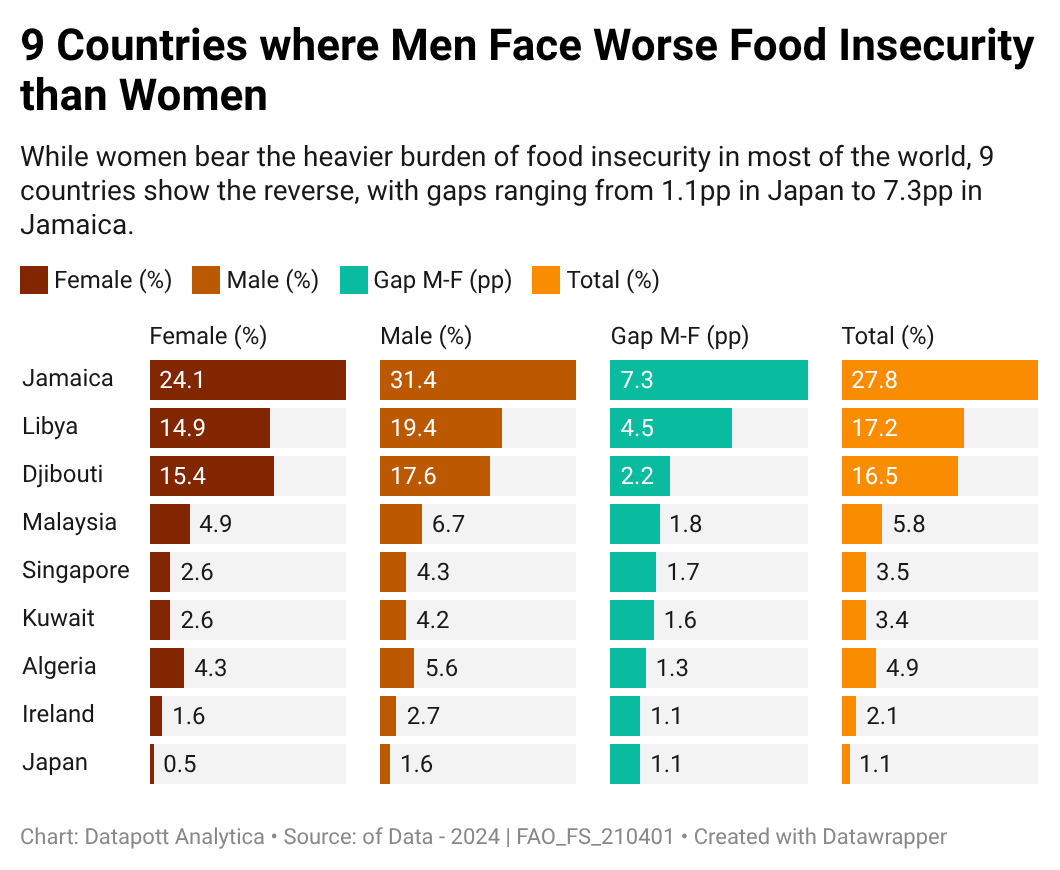
- Jamaica is the only outlier at rank 18: women at 24.1%, men at 31.4% — a -7.3pp reversal driven by male marginalisation, not female advantage.
- Countries like DR Congo, Sierra Leone, and Chad show near-equal gaps, showing that at extreme poverty levels, conflict erases gender differences and devastates everyone equally.
Insight Analysis
The top 20 female food insecurity ranking is not a random list – it is a geography of compounding disadvantage. Sub-Saharan Africa dominates because it sits at the intersection of the world’s fastest population growth, greatest climate vulnerability, and deepest gender inequality. South Sudan (63.1%) and Malawi (56.9%) are in catastrophic territory – the majority of women chronically unable to access food.
Afghanistan’s 8.3pp gap is the most politically explicit case: Taliban policies banning women from employment and public life since 2021 are now legible in food data. Gender oppression has a measurable nutritional cost. Jamaica’s -7.3pp reversal at rank 18 is the counter-narrative: women are better integrated into formal systems there, while men disengage – a Caribbean structural pattern distinct from the African and South Asian drivers throughout the rest of this list.
Policy Recommendation
- Prioritise the 16 Sub-Saharan African countries in this list for female-targeted food assistance — cash transfers and food vouchers channelled directly to women, bypassing male household intermediaries.
- Link Afghanistan engagement to women’s food security metrics — make closing the 8.3pp gender gap a formal condition of any normalised international relationship with the Taliban government.
- Publish this top 20 ranking annually as a public accountability tool — tracking whether the most food-insecure female populations globally are improving or worsening over time.
Data: FAO_FS_210401 | World Bank Data360 | 2024 | % total population (3-yr avg) | Prepared by: Datapott Analytics | 2025