Summary
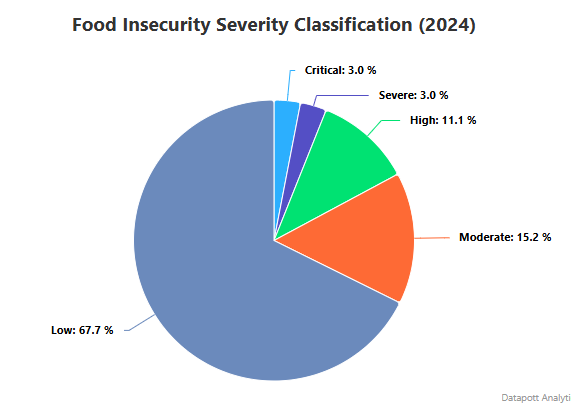
- The world is deeply split: 85 countries (67%) maintain relatively low rates of severe food insecurity below 10%, while at the other extreme, 8 countries face rates of 30% or above, a threshold that food security experts consider crisis-level.
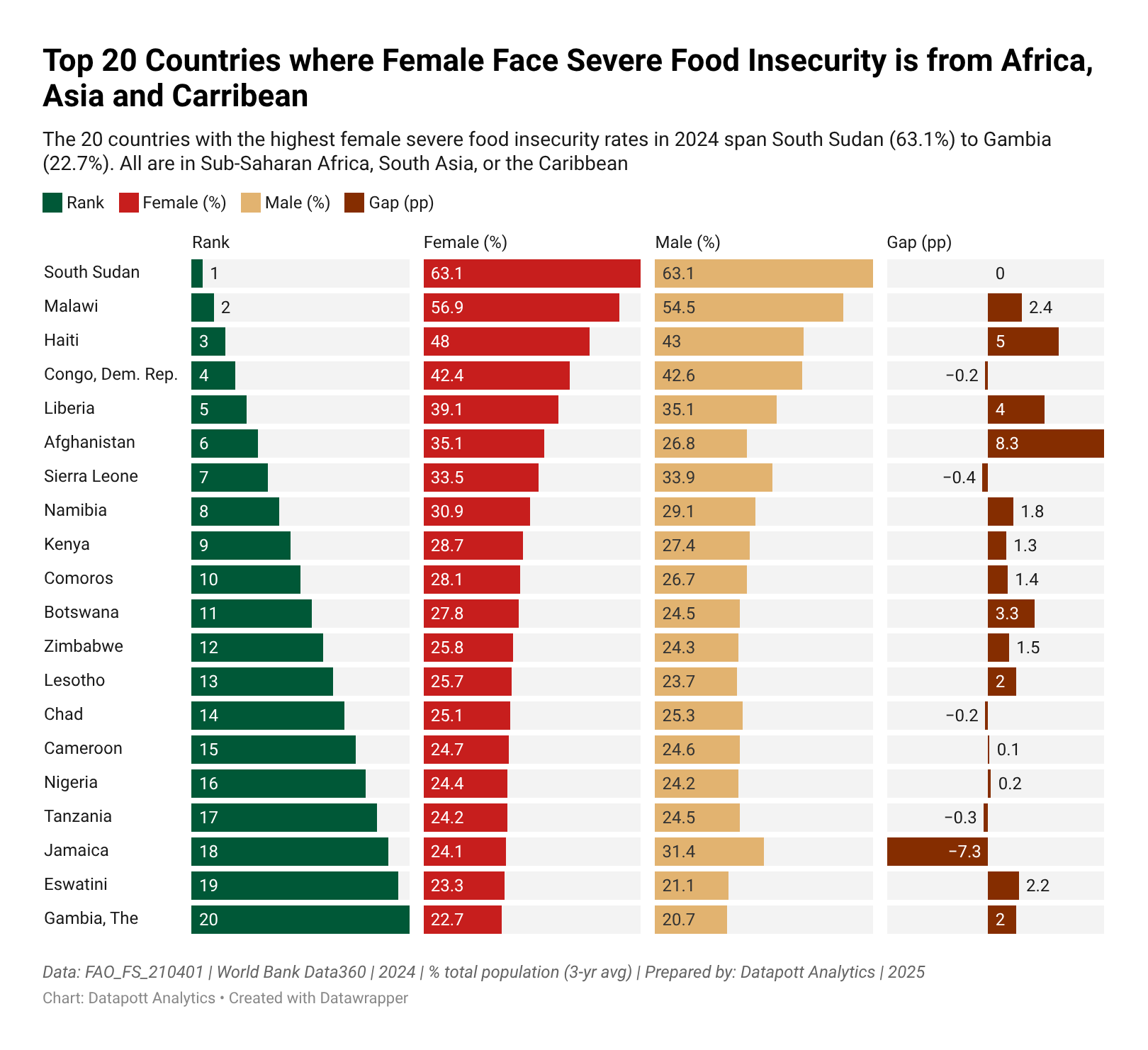
- The 4 Critical-tier countries, South Sudan (63.1%), Malawi (55.6%), Haiti (45.4%), and DR Congo (42.5%), represent active food emergencies where over two in five citizens cannot reliably access sufficient food, a condition driven by converging crises of conflict, governance failure, and climate shocks.
- The Severe tier, Liberia (37.1%), Sierra Leone (33.7%), Afghanistan (31.0%), and Namibia (30.0%), sits on the cusp of emergency, with conditions deteriorating in all four countries since 2016 and little sign of structural improvement without targeted international intervention.
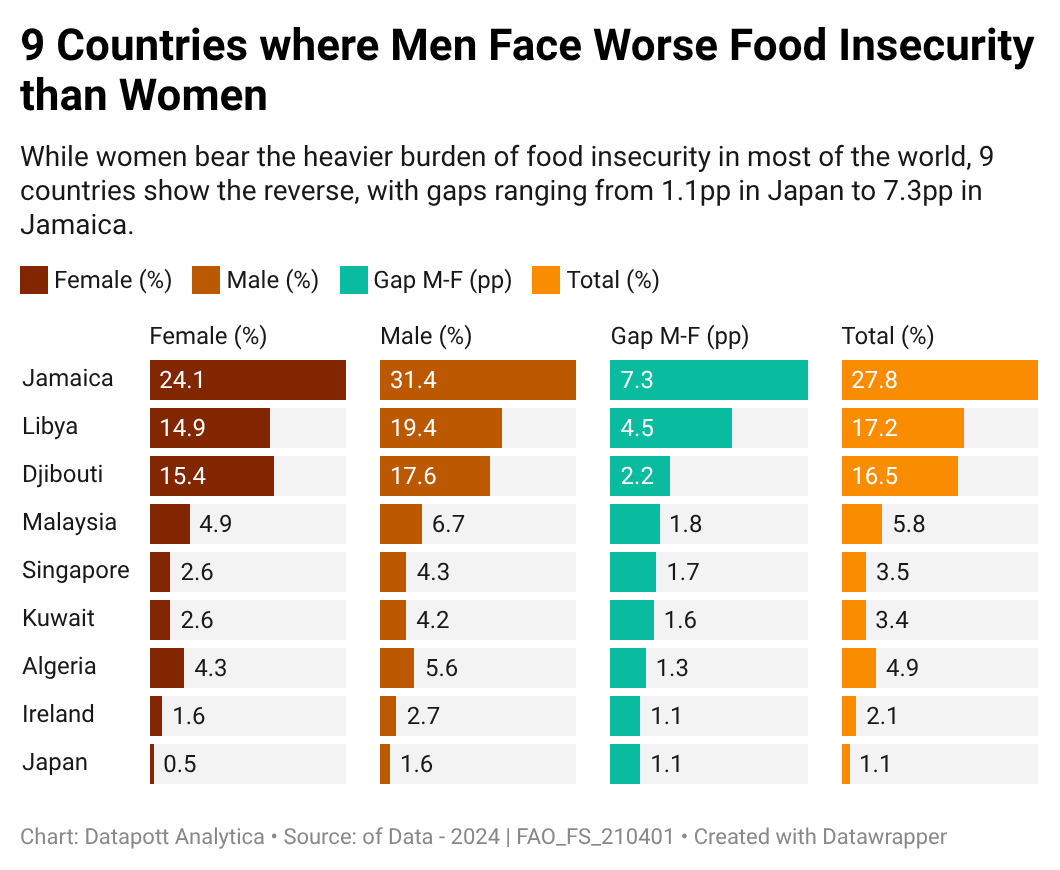
- The High tier (14 countries, 11%) includes nations like Kenya, Jamaica, Zimbabwe, and Chad where high rates coexist with government systems capable of reform, making this the tier with the greatest potential for rapid, policy-driven improvement.
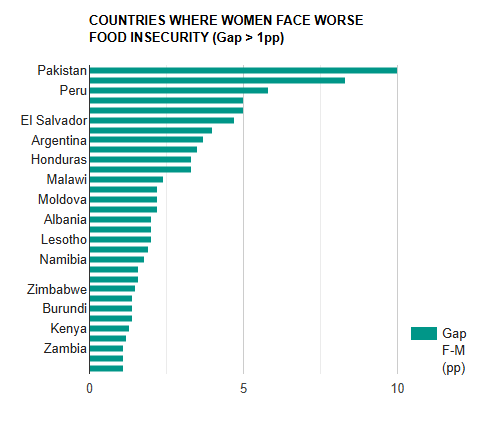
- The Low tier’s 67% of countries should not generate complacency: even within this group, pockets of severe insecurity persist at subnational level, and several countries, including Pakistan, sit just above the 10% threshold and remain highly vulnerable to economic or climate shocks

Insights Analysis
The five-tier classification reveals something the global average obscures: severe food insecurity is not a spectrum of gradual difference, it is a cliff edge. There is a profound, qualitative difference between a country like Germany (0.4%) and South Sudan (63.1%), and no smooth continuum connecting them. The 8 Critical and Severe-tier countries are in a fundamentally different category of crisis from the 85 Low-tier nations, one in which food insecurity is not a vulnerability to be mitigated but an active emergency to be ended. South Sudan at 63.1% and Malawi at 55.6% have food insecurity rates that exceed the extreme poverty rates of the world’s poorest regions.
The Severe tier commands particular attention because of its trajectory. Liberia, Sierra Leone, Afghanistan, and Namibia are not merely high, they are moving in the wrong direction, with rates that have climbed since 2016 and structural drivers, conflict, drought, economic mismanagement, that remain unresolved. Without deliberate intervention, these four countries will graduate upward into Critical status. Prevention of tier escalation must be as much a policy priority as emergency response.
The High tier (20–29%, 14 countries) represents the most actionable opportunity in this classification. Countries like Zimbabwe, Chad, and Uganda have already demonstrated improvement trajectories, Zimbabwe fell from 35.5% to 25.1%, Uganda from 21.5% to 14.9%. With targeted agricultural investment and social protection, this group has the realistic potential to graduate downward into the Moderate tier within a decade. This is where development finance delivers the highest return per dollar invested.
Policy Recommendations
- Adopt Tier-Based International Response Protocols: The UN, WFP, and FAO should formalise this five-tier classification as a global framework for triggering different levels of international response. Critical-tier countries receive emergency deployment; Severe-tier countries receive preventive crisis financing; High-tier countries receive targeted development investment, each with ring-fenced funding streams.
- Prevent Tier Escalation in the Severe Group: Liberia, Sierra Leone, Afghanistan, and Namibia must be treated as pre-emergency. Specifically: Afghanistan requires a humanitarian corridor for food aid independent of political recognition of the Taliban government; Liberia and Sierra Leone need agricultural productivity investment to reduce dependence on food imports; Namibia needs drought-resilient food systems for its semi-arid regions.
- Maximise High-Tier Graduation Through Targeted Investment: The 14 High-tier countries offer the best return on development investment. A targeted ‘Tier Graduation Fund’ should be established, offering matched domestic budget commitments with international grants for countries that achieve measurable annual reductions in severe food insecurity rates.
- Address Subnational Insecurity Within Low-Tier Countries: The Low-tier classification masks significant subnational food insecurity, particularly in large countries like USA, Australia, and India where national averages conceal severe localised deprivation. National governments in Low-tier countries must establish subnational food insecurity monitoring and targeted community nutrition programmes.
- Publish Annual Tier Re-Classifications: The FAO and World Bank should publish an annual Tier Movement Report tracking which countries have improved or deteriorated, with explicit accountability mechanisms for donor countries and multilateral institutions to report on progress against the countries in their development portfolios.