[wpdatachart id=4]
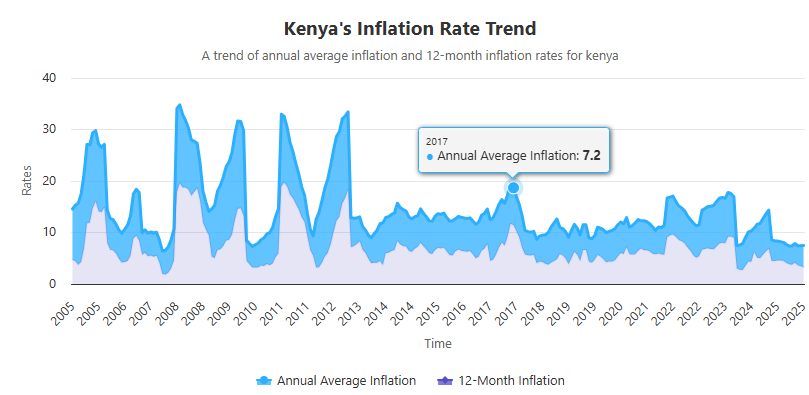
Kenya’s battle with inflation has reached a critical turning point as we head into 2026. After a period of heightened volatility, the latest data from the Central Bank of Kenya shows that the 12-month inflation rate has effectively stabilized within the government’s preferred target range. From a low of 3.62% in March 2025, inflation ended the year at 4.49% in December, signaling a successful transition from a period of high-cost-of-living concerns to one of relative price stability. This summary explores the factors behind this stabilization and what it means for the Kenyan consumer.
Inside the Trends: Inferences from the 2025 Data
By examining the monthly fluctuations in the 12-month and annual average inflation rates, several key inferences emerge regarding the Kenyan economy:
-
The “Target Range” Success: Throughout 2025, Kenya successfully kept its 12-month inflation rate well within the Central Bank’s medium-term target of 5.0% ± 2.5%. This indicates that monetary policy interventions, such as adjustments to the Central Bank Rate (CBR), have been effective in anchoring price expectations.
-
The Late-Year Uptick: The data reveals a gradual rise in the 12-month inflation rate from 3.82% in June to 4.49% by December. This upward “creep” in the final quarter often aligns with seasonal increases in demand during the festive period and potential adjustments in energy or food prices.
-
Converging Indicators: The annual average inflation and the 12-month “headline” inflation began the year with a visible gap but showed signs of convergence toward the end of 2025 (4.07% vs. 4.49%). This convergence typically suggests that the extreme “shocks” seen in previous years are fading, leading to a more predictable and stable inflationary environment.
[wpdatatable id=18]