.
 Summary:
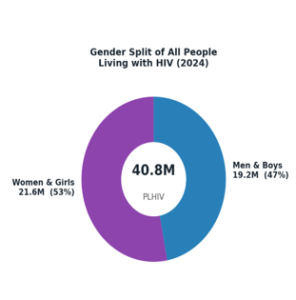
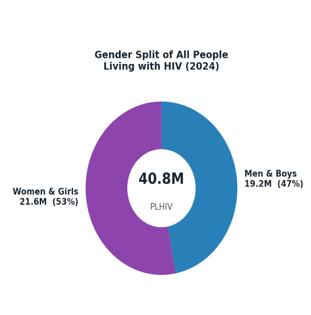
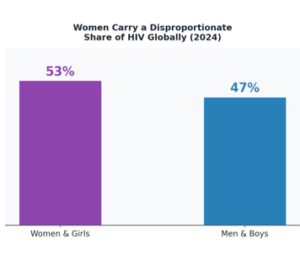 The 2024 data reveals HIV as a profoundly gendered epidemic, but not in the way popular discourse often frames it. Yes, women and girls bear the heaviest burden of infection, accounting for 53% of all 40.8 million people living with HIV. This disparity is not biological coincidence; it reflects the compounding effects of gender-based violence, unequal power in sexual relationships, limited access to prevention tools, and healthcare systems historically designed around male patients.
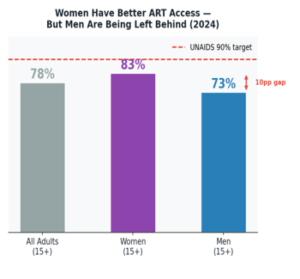
Yet the data also exposes a lesser-told crisis on the other side of the gender divide. Men are dying of undertreated HIV. With only 73% of HIV-positive men on ART versus 83% of women, the 10-point treatment gap signals a systemic failure to reach men through health services. Cultural stigma, male avoidance of clinics, and the lack of male-targeted outreach programmes are fuelling a quiet epidemic within the epidemic.
The 2024 data reveals HIV as a profoundly gendered epidemic, but not in the way popular discourse often frames it. Yes, women and girls bear the heaviest burden of infection, accounting for 53% of all 40.8 million people living with HIV. This disparity is not biological coincidence; it reflects the compounding effects of gender-based violence, unequal power in sexual relationships, limited access to prevention tools, and healthcare systems historically designed around male patients.
Yet the data also exposes a lesser-told crisis on the other side of the gender divide. Men are dying of undertreated HIV. With only 73% of HIV-positive men on ART versus 83% of women, the 10-point treatment gap signals a systemic failure to reach men through health services. Cultural stigma, male avoidance of clinics, and the lack of male-targeted outreach programmes are fuelling a quiet epidemic within the epidemic.
 The PMTCT success story, 84% of pregnant women accessing prevention services, proves that targeted, gender-specific programming works. The challenge is extending that logic beyond maternal health: designing male-friendly testing pathways, community-based ART delivery, and dismantling the stigma that keeps both women and men from seeking care. Gender equity in HIV is not a women’s issue. It is everyone’s issue.
……………
The PMTCT success story, 84% of pregnant women accessing prevention services, proves that targeted, gender-specific programming works. The challenge is extending that logic beyond maternal health: designing male-friendly testing pathways, community-based ART delivery, and dismantling the stigma that keeps both women and men from seeking care. Gender equity in HIV is not a women’s issue. It is everyone’s issue.
……………
Summary:
- Women and girls represent 53% of all people living with HIV globally. It is a disproportionate burden driven by biological vulnerability, gender-based violence, and limited autonomy over sexual health decisions.
- Despite carrying the greater HIV burden, women (83%) outpace men (73%) in ART access by 10 percentage points. It suggests that men are disengaging from healthcare systems at a dangerous rate.
- 84% of pregnant women with HIV accessed PMTCT services in 2024. It is the highest coverage of any group, yet this maternal focus has not translated into broad women’s health equity.
- The 10-point ART gender gap means an estimated 630,000 more men who need treatment are not receiving it compared to their female counterparts. This is a silent, growing crisis.
- Gender inequality in HIV is a two-sided crisis: women bear the highest burden of infection, while men bear the highest burden of untreated disease — both demand urgent, targeted action.
Who Bears the Burden? The Gender Split of HIV
The 2024 data reveals HIV as a profoundly gendered epidemic, but not in the way popular discourse often frames it. Yes, women and girls bear the heaviest burden of infection, accounting for 53% of all 40.8 million people living with HIV. This disparity is not biological coincidence; it reflects the compounding effects of gender-based violence, unequal power in sexual relationships, limited access to prevention tools, and healthcare systems historically designed around male patients.
Yet the data also exposes a lesser-told crisis on the other side of the gender divide. Men are dying of undertreated HIV. With only 73% of HIV-positive men on ART versus 83% of women, the 10-point treatment gap signals a systemic failure to reach men through health services. Cultural stigma, male avoidance of clinics, and the lack of male-targeted outreach programmes are fuelling a quiet epidemic within the epidemic.
The PMTCT success story, 84% of pregnant women accessing prevention services, proves that targeted, gender-specific programming works. The challenge is extending that logic beyond maternal health: designing male-friendly testing pathways, community-based ART delivery, and dismantling the stigma that keeps both women and men from seeking care. Gender equity in HIV is not a women’s issue. It is everyone’s issue.
……………
Data Source: UNAIDS Global HIV & AIDS Statistics Fact Sheet, 2024 | Prepared by: Datapott Analytics | 2026